Showing posts with label India. Show all posts

Wednesday, November 10, 2021

EIGHT STAGES OF YOGA

Yoga is practiced in eight different stages:

1) Yama
2) Niyama
3) Āsana
4) Prāṇāyāma
5) Pratyāhāra
6) Dhāraṇā
7) Dhyāna
8) Samādhi

But in Kali Yuga, this system of attaining the lotus feet of the Lord, is highly impossible. Hence it is recommended to chant the holy names of the Lord, the Hare Krishna maha-mantra, for very easily and quickly attaining the shelter of the lotus feet of the Lord.

For more, refer Srimad-Bhagavatam 3.27.6

Tuesday, November 9, 2021

A.M and P.M

All these days, we were made to believe that, the terms A.M. and P.M. stands for :

A.M. - ante meridian

P.M. - post meridian

( _ante_ of *what*) and ( _post_ of *what* ) never clarified ... !!!

(what = the subject
itself is missing)

Now our ancient SAMSKRUTAM texts have blown off the ambiguity and the things are now Crystal clear.

Just take a look:-

A.M. = Aarohanam Marthandasya

P.M. = Pathanam Marthandasya

Explanation:-

The ‘Sun’ who is vital to the calculation remains un-mentioned. This is unthinkable and unjustifiable. That lacuna arises because it is not realized that the letters A.M. and P.M. are the initials of the hoary Sanskrit expressions -
(आरोहणम् मार्तडस्य्) Arohanam Martandasaya
_(i.e. the climbing of the sun)_
and
(पतनम् मार्तडस्य्) Patanam Martandasaya
_(i.e. the falling of the sun)

Saturday, June 5, 2021

Onake Obavva

Chitradurga, which is situated amidst towering boulders and hillocks, is a small town in Karnataka, India.

The Nayaka Dynasty once ruled this rocky terrain for about 250 years between the 1550s and 1700s. During the late-1700s, the Chitradurga kingdom lay in between two great powers — the Maratha kingdom in the north, ruled by Peshwa Madhav Rao, and the Mysore kingdom in the south, ruled by Hyder Ali.

During the reign of the last Nayaka ruler of Chitradurga, Hyder Ali tried to lay siege and attacked the fort multiple times. The fort was so well built that it was impregnable, and the initial attacks by Hyder Ali were unsuccessful.

One day, a soldier in Hyder Ali’s army saw a person entering the fort through a small crevice between the rocks surrounding the fort. The hole was big enough for only one person to crawl through at a time. With this piece of information, Hyder Ali decided to attempt another siege by sending his soldiers through this crevice into the fort.

A sentry of Chitradurga was guarding the crevice inside the fort. His name was Kahale Mudda Hanuma, and his wife’s name was Obavva.

On her way back, she saw one of Hyder Ali’s soldiers entering the fort from the crevice. Thinking quickly, Obavva took an Onake or a pestle (a long wooden device used for pounding paddy and other grains) and struck him on his head, killing him instantly.

Anticipating more soldiers, Obavva hid the dead soldier’s body and stood guard at the crevice. A lone woman with no prior training in the art of war did not deter her from this situation.

True to her anticipation, more soldiers crawled into the fort through the crevice. She struck every soldier one after the other, as they entered through the hole, and dragged each dead soldier’s body aside.

When Kahale Mudda Hanuma returned after lunch, he was stunned to see a bloodied Onake in Obavva’s hand and a pile of dead soldiers on the side. He immediately sounded the war alarm and warned the others to prepare for battle.

Obavva died the same day of this incident, but the actual reason for her death remains unknown.

Although Obavva’s heroic act delayed Hyder Ali’s siege on the fort, the last Nayaka ruler lost to Hyder Ali. And Mysore conquered the Chitradurga fort.

Neither losing the war, nor Obavva’s death could mar her achievement. Obavva had no prior experience in warfare. But, she rose to the situation, used whatever little resource she had, and displayed exemplary resolve and courage to prevent enemies from entering the fort. In doing so, she has given us a lesson not to get discouraged and face any challenge thrown at us with courage and determination.

History refers to her as Onake Obavva. The crevice she was once guarding is now called Obavvanna Kindi (Kindi means crevice in Kannada), and Chitradurga has a stadium named after her. The legend of Onake Obavva continues to marvel both kids and adults alike

India’s Youngest Spy In The INA

  Saraswathi Rajamani

It is widely known that women’s contributions to social change throughout history have been subject to the blatant erasure of facts, so much so that all important moments in history appear to have been manifested by men. It becomes increasingly necessary to take a careful glimpse back into history to ensure that women’s achievements are not dismissed, that they were as much a part of enabling positive social change as their counterparts who are men. Today, we talk about Saraswathi Rajamani, an Indian spy.

 the year 1927, Saraswathi Rajamani was born into an affluent family in Myanmar. Her home environment was considerably liberal, and she thus had more freedom to explore and learn things that many young Indian women would not be allowed to practice. With a father who greatly admired freedom fighters, she grew up in an intensely patriotic environment. In 1937, upon a visit to her house, Mahatma Gandhi found 10-year old Saraswathi polishing her shooting skills! Having asked her why a little child needs to know how to use a gun, she replied simply, “To shoot down the Britishers, of course.

Despite Gandhi’s efforts in fostering in her the value of ‘ahimsa’ (non-violence), she was always convinced that a non-violent struggle would not be as effective as a violent one. She replied, “We shoot and kill the looters, don’t we? The British are looting India, and I am going to shoot at least one Britisher when I grow up.” Following her beliefs, she eventually gravitated to the methods of obtaining freedom that Subhas Chandra Bose advocated for. His methods resonated with her deeply, and she adopted the slogan, “Tum mujhe khoon do or main tumhe azadi dunga (You give me blood, and I will give you freedom)." 

At the age of 16, Saraswathi Rajamani was inspired by Subhas Chandra Bose, his unapologetic demeanour, and his powerful speech on taking up arms against the British. On his way back from the speech, as Bose was requesting for funds for the Indian National Army (INA), the young girl gave away all her jewellery to him. With little faith in the judgement of a 16-year old, Bose went to her house to return the jewellery, only for the gesture to be rejected both by Rajamani’s fierce insistence and her father’s encouragement to support the INA. It was this generous step that led Bose to name her ‘Saraswathi’, which means ‘wealth’.

Impressed by Saraswathi’s dedication to the cause of obtaining freedom from the British, Bose recruited her into the INA, making her the youngest person, as well as the first woman spy, to have joined the INA’s intelligence wing. Saraswathi Rajamani was bestowed with the opportunity to investigate government orders and convey any message from the British military to the INA. She would be disguised as a young boy under the name of ‘Mani’. While she performed her duty well, there came an instance wherein she was forced to disregard the rule of not getting caught when her friend was captured by the British. Rajamani dressed as a dancing girl to enter the British camp, drugged the British officer, and rescued her partner.

She did, however, get shot in the leg in her attempt to escape. Far from allowing this to slow her down, Rajamani continued to run, even climbed a tree and camped there for three days whilst the British conducted a search operation. Instead of letting the limp get the best of her otherwise fiery spirit, Rajamani wore it as a beloved souvenir of her days as a spy. However, as it often happens, her important role as a member of Bose’s army soon slipped into oblivion…

For the most part, Rajamani stayed alone in an old house in Chennai with hardly any savings as her family had given away almost everything they had to the freedom struggle. It was only in 2005 that J. Jayalalitha, the then Chief Minister of Tamil Nadu, offered her a different house to live in, which Rajamani adorned with photos of Netaji. Despite her old age, her faith in the nation did not wither. She also made sure to give back to society by collecting fabric scraps from tailors and donating hand-sewn clothes to old age homes and orphanages. Additionally, her philanthropic spirit is evident in the fact that in 2006, she donated her dismal pension to the relief fund established for those who were affected by the tsunami.

It is indeed a tragedy that such a strong (and badass!) personality has been allowed to be forgotten. There is scarce information available on her life, very few details on the nature of her work and how she contributed to it. A rare gem, Saraswathi Rajamani proved very early on in life that she was a warrior who would fight endlessly for what she deemed important with unmatched determination. One can only hope to take inspiration from her and learn from her example the confidence it takes to stand up for your principles

Tuesday, February 7, 2017

Independence Day.

In 1929 at Lahore, the Congress voted for complete independence as against a dominion status for India and passed a resolution fixing the last Sunday of January 1930 – which happened to be January 26 – as the Complete #IndependenceDay.

On the midnight of December 31, 1929, on the eastern bank of the river Ravi, in the shadow of the Badshahi Masjid, Gurdwara Dera Sahib and the Lahore Fort, Jawaharlal #Nehru raised the “swaraj” flag that was later adopted as the national flag of India. After Partition and #Independence on August 15, 1947, Jawaharlal Nehru saw to it that India’s new #constitution took effect on January 26, 1950, thus ensuring that it would not remain just a date in #history.

Friday, February 3, 2017

Your kids grow up confident & happy?

*If you tell a kid a hundred times that he/she is a loser and even in times he/she fought hard he still ultimately lost - will the kid grow up confident & happy?*

Then why do Indian school history text books only talk about losses? Why are even their version of heroes valiant losers like Porus, Prithviraj Chauhan , Rana Sangha or Hemu? What is the subliminal message a kid gets ? But more importantly is it even true?

Answer - NOT TRUE

Indian monarchs have won as many times as they have lost and we have had many kings that have been expansionist outside India and total winners out and out. There is ZERO information on these winners in India.

Read our sample list of winners below and think of how many of these names do you really know?

1) Lachit Borpukan & Ahom empire of Assam - beat Mughal armies 17 times & never got conquered

2) Sikh empire of Ranjith Singh & his main general Hari Singh Nalwa - ruled all over Pakistan, Afghanistan & Kashmir - Afghans used to run scared of them

3) Kashmiri king Gulab singh & his general Zorawar Singh - invaded & conquered Tibet

4) Rajendra Chola - Tamil empire was extended to almost all of South Asia

5) Krishnadevaraya of Hampi - Babur never attacked south because he had heard of how powerful this man was

6) Kakatiyas of Orrisa - Consolidated large area in East India and Deccan

7) Raja Sundermal - had his kingdom in Bharatpur in middle of Mughals

8) Rana Kumbha - Thrashed invaders and built a victory stambh

9) Bajirao Ballal - Mughals & Deccan sultans shivered in fear just by his name. Never lost single battle. Expanded Maratha empire all the way till Attock - Pakistan

*Most Indians have not even heard these names - but they have all heard how we lost 3 $Panipats, how #Prithviraj lost to Ghuri, how Ghazni defeated us 17 times, how we lost Plassey, how we lost first war of independence*

All subliminal mind games to keep you feeling inferior and mentally colonized!!

Thursday, February 25, 2016

Anti Indian NGO's


Foreign Funding Allegation

Intelligence Bureau, in a report accused "foreign-funded" NGOs of "serving as tools for foreign policy interests of western governments" by sponsoring agitations against nuclear and coal-fired power plants and anti-GMO agitation across the country. The NGOs, are said to be working through a network of local organisations to negatively impact GDP growth by 2-3%. The report says,
A significant number of Indian NGOs funded by donors based in US, UK, Germany and Netherlands have been noticed to be using people-centric issues to create an environment, which lends itself to stalling development projects.
It alleged that Greenpeace was leading a “massive effort to take down India's coal-fired power plant and coal mining activity” by using foreign funds to “create protest movements under 'Coal Network' umbrella at prominent coal block and coal-fired power plant locations in India”. The Intelligence Bureau said the foreign NGOs and their Indian arms were serving as tools to advance Western foreign policy interests."Greenpeace aims to fundamentally change the dynamics of India's energy mix by disrupting and weakening the relationship between key players," the IB report said.
In April 2015, the Government of India shared a list of over 42,000 NGOs with Financial Intelligence Unit (FIU) to check suspicious foreign funding amid the crackdown on some top international donors for flouting the Foreign Contribution Regulation Act (FCRA), 2011. These 42,273 NGOs were put under watch after intelligence reports claimed that several charity organisations are diverting funds for purposes other than the permitted use of foreign contribution.The list includes NGOs operating in religious, cultural, economic, social and educational fields. For the first time, the government has clearly defined the sectors in which it has listed Christian missionaries, Hindu, Sikh and Muslim religious groups receiving foreign contribution besides other activities of NGOs in which funds are claimed to be utilised. There is also suspicion that money launderers could use the legitimate route to wire illicit money.Many of them are Christian Missionaries and other religious groups who are found to evade taxes.
 
Following the enquiry, permits of about 8,875 NGOs have been revoked for a variety of reasons ranging from non-filing of returns or non-compliance with Foreign Contribution Regulation Act (FCRA).Image result for anti indian ngo's

Terrorist Groups In India

Assam
1. United Liberation Front of Asom (ULFA) 
2. National Democratic Front of Bodoland (NDFB)
3. United People's Democratic Solidarity (UPDS)
4. Kamtapur Liberation Organisation (KLO)
5. Bodo Liberation Tiger Force (BLTF)
6. Dima Halim Daogah (DHD)
7. Karbi National Volunteers (KNV) 
8. Rabha National Security Force (RNSF)
9. Koch-Rajbongshi Liberation Organisation (KRLO)
10. Hmar People's Convention- Democracy (HPC-D)
11. Karbi People's Front (KPF)
12. Tiwa National Revolutionary Force (TNRF)
13. Bircha Commando Force (BCF)
14. Bengali Tiger Force (BTF)
15. Adivasi Security Force (ASF)
16. All Assam Adivasi Suraksha Samiti (AAASS)
17. Gorkha Tiger Force (GTF)
18. Barak Valley Youth Liberation Front (BVYLF)
19. Muslim United Liberation Tigers of Assam (MULTA) 
20. United Liberation Front of Barak Valley
21. Muslim United Liberation Front of Assam (MULFA)
22. Muslim Security Council of Assam (MSCA)
23. United Liberation Militia of Assam (ULMA)
24. Islamic Liberation Army of Assam (ILAA)
25. Muslim Volunteer Force (MVF)
26. Muslim Liberation Army (MLA)
27. Muslim Security Force (MSF)
28. Islamic Sevak Sangh (ISS)
29. Islamic United Reformation Protest of India (IURPI)
30. United Muslim Liberation Front of Assam (UMLFA)
31. Revolutionary Muslim Commandos (RMC)
32. Muslim Tiger Force (MTF)
33. People’s United Liberation Front (PULF)
34. Adam Sena (AS)
35. Harkat-ul-Mujahideen
36. Harkat-ul-Jehad
 
Jammu & Kashmir
Terrorist Outfits
1. Lashkar-e-Omar (LeO)
2. Hizb-ul-Mujahideen (HM)
3. Harkat-ul-Ansar (HuA, presently known as Harkat-ul Mujahideen)
4. Lashkar-e-Toiba (LeT)
5. Jaish-e-Mohammed (JeM)
6. Harkat-ul Mujahideen (HuM, previously known as Harkat-ul-Ansar)
7. Al Badr
8. Jamait-ul-Mujahideen (JuM)
9. Lashkar-e-Jabbar (LeJ)
10. Harkat-ul-Jehad-i-Islami
11. Al Barq
12. Tehrik-ul-Mujahideen
13. Al Jehad
14. Jammu & Kashir National Liberation Army
15. People’s League
16. Muslim Janbaz Force
17. Kashmir Jehad Force
18. Al Jehad Force (combines Muslim Janbaz Force and Kashmir Jehad Force)
19. Al Umar Mujahideen
20. Mahaz-e-Azadi
21. Islami Jamaat-e-Tulba
22. Jammu & Kashmir Students Liberation Front
23. Ikhwan-ul-Mujahideen
24. Islamic Students League
25. Tehrik-e-Hurriat-e-Kashmir
26. Tehrik-e-Nifaz-e-Fiqar Jafaria
27. Al Mustafa Liberation Fighters
28. Tehrik-e-Jehad-e-Islami
29. Muslim Mujahideen
30. Al Mujahid Force
31. Tehrik-e-Jehad
32. Islami Inquilabi Mahaz
 
Other Extremist and Secessionist Groups
1. Mutahida Jehad Council (MJC) -- A Pakistan based coordination body of terrorist outfits active in Jammu and Kashmir
2. Jammu & Kashmir Liberation Front (JKLF)-- The dominant faction of this outfit declared a ceasefire in 1994 which still holds and the outfit restricts itself to a political struggle.
3. All Parties Hurriyat Conference (APHC) -- an alliance engineered by Pakistan's Inter Services Intelligence (ISI) of 26 diverse political and socio-religious outfits amalgamated to provide a political face for the terrorists in the State.
4. Dukhtaran-e-Millat (DeM) -- an outfit run by women which uses community pressure to further the social norms dictated by Islamic fundamental groups.
 
Manipur
1. United National Liberation Front (UNLF)
2. People’s Liberation Army (PLA)
3. People’s Revolutionary Party of Kangleipak (PREPAK)
The above mentioned three groups now operate from a unified platform, 
the Manipur People’s Liberation Front (MPLF)
4. Kangleipak Communist Party (KCP)
5. Kanglei Yawol Kanna Lup (KYKL)
6. Manipur Liberation Tiger Army (MLTA)
7. Iripak Kanba Lup (IKL)
8. People’s Republican Army (PRA)
9. Kangleipak Kanba Kanglup (KKK)
10. Kangleipak Liberation Organisation (KLO) 
11. Revolutionary Joint Committee (RJC)
12. National Socialist Council of Nagaland -- Isak-Muivah (NSCN-IM)
13. People’s United Liberation Front (PULF)
14. North East Minority Front (NEMF)
15. Islamic National Front (INF) 
16. Islamic Revolutionary Front (IRF)
17. United Islamic Liberation Army (UILA)
18. United Islamic Revolutionary Army (UIRA)
19. Kuki National Front (KNF) 
20. Kuki National Army (KNA) 
21. Kuki Revolutionary Army (KRA)
22. Kuki National Organisation (KNO)
23. Kuki Independent Army (KIA) 
24. Kuki Defence Force (KDF) 
25. Kuki International Force (KIF)
26. Kuki National Volunteers (KNV) 
27. Kuki Liberation Front (KLF)
28. Kuki Security Force (KSF) 
29. Kuki Liberation Army (KLA)
30. Kuki Revolutionary Front (KRF)
31. United Kuki Liberation Front (UKLF)
32. Hmar People’s Convention (HPC) 
33. Hmar People's Convention- Democracy (HPC-D)
34. Hmar Revolutionary Front (HRF)
35. Zomi Revolutionary Army (ZRA) 
36. Zomi Revolutionary Volunteers (ZRV)
37. Indigenous People's Revolutionary Alliance(IRPA)
38. Kom Rem People's Convention (KRPC)
39. Chin Kuki Revolutionary Front (CKRF) 
 
Meghalaya
1. Hynniewtrep National Liberation Council (HNLC)
2. Achik National Volunteer Council (ANVC)
3. Garo National Liberation Army (GNLA)
4. Liberation of Achik Elite Force (LAEF)
4. People’s Liberation Front of Meghalaya (PLF-M) 
5. Hajong United Liberation Army (HULA)
 
Nagaland
1. National Socialist Council of Nagaland (Isak-Muivah) – NSCN(IM)
2. National Socialist Council of Nagaland (Khaplang) – NSCN (K)
3. Naga National Council (Adino) – NNC (Adino)
 
Punjab
1. Babbar Khalsa International (BKI)
2. Khalistan Zindabad Force (KZF) 
3. International Sikh Youth Federation (ISYF) 
4. Khalistan Commando Force (KCF)
5. All-India Sikh Students Federation (AISSF)
6. Bhindrawala Tigers Force of Khalistan (BTFK)
7. Khalistan Liberation Army (KLA)
8. Khalistan Liberation Front (KLF)
9. Khalistan Armed Force (KAF)
10. Dashmesh Regiment
11. Khalistan Liberation Organisation (KLO)
12. Khalistan National Army (KNA)
 
Tripura
1. National Liberation Front of Tripura (NLFT)
2. All Tripura Tiger Force (ATTF)
3. Tripura Liberation Organisation Front (TLOF)
4. United Bengali Liberation Front (UBLF)
5. Tripura Tribal Volunteer Force (TTVF)
6. Tripura Armed Tribal Commando Force (TATCF)
7. Tripura Tribal Democratic Force (TTDF)
8. Tripura Tribal Youth Force (TTYF)
9. Tripura Liberation Force (TLF)
10. Tripura Defence Force (TDF)
11. All Tripura Volunteer Force (ATVF)
12. Tribal Commando Force (TCF)
13. Tripura Tribal Youth Force (TTYF)
14. All Tripura Bharat Suraksha Force (ATBSF)
15. Tripura Tribal Action Committee Force (TTACF)
16. Socialist Democratic Front of Tripura (SDFT)
17. All Tripura National Force (ATNF)
18. Tripura Tribal Sengkrak Force (TTSF)
19. Tiger Commando Force (TCF) 
20. Tripura Mukti Police (TMP)
21. Tripura Rajya Raksha Bahini (TRRB)
22. Tripura State Volunteers (TSV)
23. Tripura National Democratic Tribal Force (TNDTF)
24. National Militia of Tripura (NMT)
25. All Tripura Bengali Regiment (ATBR)
26. Bangla Mukti Sena (BMS) 
27. All Tripura Liberation Organisation (ATLO) 
28. Tripura National Army (TNA) 
29. Tripura State Volunteers (TSV) 
30. Borok National Council of Tripura (BNCT)
 
Mizoram
1. Bru National Liberation Front
2. Hmar People's Convention- Democracy (HPC-D)
 
Arunachal Pradesh
1. Arunachal Dragon Force (ADF)
 
Left-wing Extremist groups
1. Communist Party of India-Maoist (CPI-Maoist)
2. People's War Group
3. Maoist Communist Centre
4. People's Guerrilla Army
5. Communist Party of India-Marxist Leninist-Janashakti(CPI-ML-Janashakti) 
6. Tritiya Prastuti Committee (TPC) 
 
Other Extremist Groups
1. Tamil National Retrieval Troops (TNRT)
2. Akhil Bharat Nepali Ekta Samaj (ABNES)
3. Tamil Nadu Liberation Army (TNLA)
4. Deendar Anjuman
5. Students Islamic Movement of India (SIMI)
6. Asif Reza Commando Force
7. Liberation Tigers of Tamil Eelam (LTTE)
8. Kamatapur Liberation Organisation (KLO)
9. Ranvir Sena

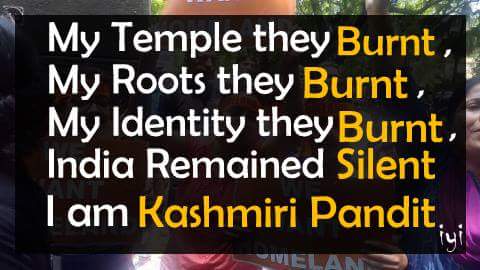
Kashmiri Pandits Minorities In Our Country.


After years of helplessness, struggle, apathy, neglect, protests, petitions and tears, finally the voice of the Kashmiri Pandits is being heard. It is a result of a lifetime of prayers answered for a tiny community that has been languishing in despair and hopelessness.

In his inaugural address to the joint session of Parliament, President Pranab Mukherjee said special attempts will be made to ensure that Kashmiri Pandits return to the land of their ancestors with full dignity, security and assured livelihood. This was the first time since the shameful exodus of the Kashmiri Pandits in 1990 that their return and rehabilitation was mentioned by the highest offices of power in the country. Ever since, there is a re-rekindling of hope in the community, which has been pining for a home for more than two decades now. Strife and struggle aren’t new to the Hindus of Kashmir, who over centuries of suppression have been reduced to a micro-minority in their own land. The 1990 exodus is their seventh known exodus.They have been subjected to ethic cleansing while the whole country watched silently. They were seen as ‘agents’ of the government of India, symbols of Hindu India that needed to be wiped out.

Over the years, what has pained the community more than the loss of their homeland is complete apathy by the governments in power. Any time the Kashmir issue was discussed, separatists, terrorists and secessionists were invited, but the Pandits had no voice, and if any of them spoke, it was ignored.

So far, there is no consensus even on the reasons that lead to the exodus.The liberal narrative, which has taken its cue from the Jihadi narrative emanating from the valley, still believes the Pandits left on their own volition and there was no threat to their lives, their women and their property. That the then governor of Jammu and Kashmir, Jagmohan, coaxed and coached the Pandits to leave is still the dominant narrative. The Pandits have actually been mauled and butchered in their own homeland. There all have unbearably painful stories of murders, rapes, and torture to tell.

"I was 20 years old when terrorists of Jammu and Kashmir Liberation Front (JKLF) killed my father in broad daylight... The memories of the incident and the sight of the bullet-ridden body of my father still sends chills down my spine," says Ashutosh Taploo, son of Tika Lal, who was the first person from the community to have been killed by terrorists.

"I was only ten when terrorists blew off our house in Ashmuji village of Kulgam district and shot at my father and grandfather from a point-blank range. It would be impossible for me and my family to return to our native place and live amongst the people who had facilitated the killing of my father and grandfather," says 35-year-old Sandeep Kaul.

No Pandit will ever feel safe in the Kashmir valley unless those who killed them, raped them, maimed them, and burnt their homes are made to face court of law. What happened in 1990 was a crime against humanity. Those who perpetrated the violence are roaming free on the roads of Kashmir. No one has been punished, no convictions have been made, no cases have ever been registered or pursued against the murderers. Justice must be brought against those who were actively involved in killings. No Pandit will feel safe in his own home while the murderers roam freely in the valley.

Now, after years of hardship, finally, when there is talk of return to the valley, all the community asks for is a composite township where the people who had to migrate, can live under a safe and secure environment. Such a township is much needed as Kashmir Valley continues to remain in the grip of terrorism. Apart from providing the much-needed security to the community the township would help preserve their culture and tradition. The separatist groups of the Valley have been protesting against such a township. It is viewed as a conspiracy by many so that the Pandits do not return to their homeland.

We as a nation have failed our Kashmiri Pandit brothers and sisters earlier, but this time, we have to stand by them, to ensure that they are protected and get their right to live in dignity and peace without fearing for their lives, like the rest of the minorities in our country. 

Thaks to ShankhNaad

Wednesday, January 27, 2016

Sanskrit Universities in India.


1. Rashtriya Sanskrit Vidyapeetha, Tirupati (Andhra Pradesh)
 
2. Rashtriya Sanskrit Sansthan (Deemed University) New Delhi
 
3. Sri Venkateswara Vedic University, Tirumala, Tirupati (Andhra Pradesh)
 
4. Kameshwar Singh Darbhanga Sanskrit University,Kameshwar Nagar, Darbhanga (Bihar)
 
5. Shri Lal Bahadur Shastri Rashtriya Sanskrit Vidyapeetha, Katwaria Sarai, New Delhi
 
6. Sree Sankaracharya University of Sanskrit, Kalady, Dist. Ernakulam
 
7. Shri Jagannath Sanskrit Vishvavidyalaya, Srivihar, Puri
 
8. Jagadguru Ramanandacharya Rajasthan Sanskrit University,
 
9. Sampurnanand Sanskrit Vishwavidyalaya, Varanasi
 
10. Somnath Sanskrit University, Somnath, Junagadh, (Gujarat)
 
11. Uttarakhand Sanskrit Vishwavidyalaya, Haridwar
 
12. Kavikulaguru Kalidas Sanskrit Vishwavidyalaya, Ramtek, Nagpur
 
13. Maharishi Panini Sanskrit Evam Vedic University, Ujjain (Madhaya Pradesh)
 
14. Karnataka Sanskrit University Chamrendra Sanskrit Mahapathshala, Bangalore 
(Karnataka)
 
15. Kumar Bhaskar Varma Sanskrit and Ancient Studies University, Nalbari (Assam)

Academic Sanskrit Studies Around The World

India

Sanskrit Universities
 
Academy of Sanskrit Research

Melkote

French Institute, 
Pondicherry

IGNCA
Indira Gandhi National Centre for the Arts


Institute of Asian Studies
Chennai


Department of Sanskrit and Prakrit Languages Pune University
Centre of Advanced Study in Sanskrit, Pune

America

El Colegio de Mexico 
Center for Asian and African Studies
Brown University 
Classics Department
 
California Institute of Integral Studies
Asian and Comparative Studies  

Case Western University 
Department of Religious Studies  

Columbia University 
Dept of Middle East and Asian Languages and Cultures   

Concordia University, Canada
Classics Department   

Cornell University
South Asia Program   

Emory University 
Language Center   

John Hopkins University 
Language Teaching Center

Harvard University
Sanskrit and Indian Studies
 
Indiana University
India Studies   

Loyola Marymount University
Yoga Studies 

McGill University, Canada
Religious Studies Department   

McMaster University, Canada
Religious Studies Department
 
Ohio State University   

Rutgers University  
South Asian Studies Program   

SUNY at Buffalo 
Department of Classics 

SUNY at Stony Brook 
Department of Asian and Asian American Studies   

Universidade de Sao Paulo
Departamento de Letras Classicas e Vernaculas   

University of Alabama 
Critical Languages Center   

University of British Columbia, Canada  
Centre for India and South Asian Research

University of Calgary, Canada
Philosophy Department
 
University of California at Santa Barbara 
Department of East Asian Languages and Cultural Studies
 
University of California at Berkeley
South and Southeast Asian Studies

 
University of Colorado at Boulder  (In conjunction with Naropa University)  
Department of Religious Studies   

University of Florida 
Center for the study of Hindu Traditions   

University of Hawaii  
Center for South Asian Studies   

University of Illinois at Urbana Champagne 
Department of Linguistics   

University of Iowa  
Department of Asian Languages and Literature
 
University of Michigan at Ann Arbor
Asian Languages and Cultures

University of North Texas
Philosophy and Religious Studies
 
University of Pennsylvania
Department of South Asia Studies

University of Pittsburgh
Indo-Pacific Council

University of Rochester
Department of Religion and Classics

University of Saskatchewan
Religious Studies
 
University of South Florida
Religious Studies
 
University of Texas at Austin
Asian Studies
 
University of Toronto 
Faculty of Arts and Sciences
 
 
University of Wasington in Seattle
Department of Asian Languages and Literature
 
University of Wisconsin at Madison
Languages and Cultures of Asia
 
Washington and Lee University 
Department of Religion
 
Yale University  
Department of Linguistics


Australia

Australian National University (in conjunction with Sydney University)
South Asia Centre

La Trobe University
Asian Studies

University of Queensland Centre for Buddhist Studies    University of Sydney
Indian Studies


Europe

Austria

Vienna University Institut f�r S�dasien-, Tibet- und Buddhismuskunde Universitat Wien (ISTB)
Institut f�r Kultur- und Geistesgeschichte Asiens

Belgium

Gent University
Louvain University 
Oriental Institute

Denmark

University of Copenhagen
Asian Studies

Finland

University of Helsinki
Institute for Asian and African Studies

France

Universit� Paris (Sorbonne Nouvelle)
Universit� de Lyon
Universit� de Lille
Universit� de Provence
Ecole pratique des Hautes Etudes
EHESS

Germany

German Indology Website
Berlin (Freie Universit�t)
Indian Studies

Bonn University
Indian Studies

Freiburg University
Oriental Studies

G�ttingen University
Indian and Buddhist Studies

Halle University
Indological Studies

Hamburg University
Indian and Tibetan Studies

Heidelberg University
Classical Indian Studies

Kiel University
K�ln University
Indology and Tamil Studies

Leipzig University
Indology

Mainz University
Indology

Marburg University
Indology

M�nchen University
Indology

M�nster University
Indology

T�bingen University
Indian Studies/ Comparative Religion

Wrzburg University
Indology

Great Britain

Cambridge University
Oriental Studies

Edinburgh University
Asian Studies

London University
Oriental & African Studies

Oxford University
Oriental Studies

Italy

University of Bologna
Oriental Studies

University of Rome
Oriental Studies

State University, Milan
Catholic University, Milan
University of Venice
University of Bologna
University of Pisa
University of Rome
University of Naples
University of Cagliari
University of Florence
University of Palermo
University of Turin

The Netherlands

Groningen University
Institute for the Institute of Indian Studies

Leiden University
Kern Institute, Department of Indian and Tibetan Studies

Norway

Oslo University
Oriental Studies

Russia

Moscow State University
Institute of Asian and African Studies

Sweden

Stockholm University
Indology

Uppsala University

Switzerland

Lausanne University
Indian Studies

Z�rich University
Indian Studies


Middle/Near-East Asia
 
Hebrew University of Jerusalem, Israel 
Institute of Asian and African Studies   

Tel-Aviv University, Israel 
East Asian Studies Department   

Indian School, Oman 
Department of Sanskrit

Asia

Beijing University 
Center for Indian Studies
 
Kyoto University, Japan
Department of Indology

And over 40 more universities across Japan
Chulalongkorn University, Thailand
 
Mahidol University, Thailand 
Buddhist Studies, Department of Humanities
MA Program in Indian Studies

Chulalongkorn University, Thailand

Silpakorn University, Thailand 
Sanskrit Study Centre   


Tools and Materials for Home-Study

The American Sanskrit Institute
A non-academic institution offering weekend and residential immersion courses

California Institute of Integral Studies
Lectures, workshops, and trainings by the many Eastern and Western teachers in the San Francisco Bay Area.

Devanagari Script
Learn the Devanagari script used for writing Hindi and Sanskrit.

Hindu University of America
Intelligent Internet Ready Languages
iLEAP
Version 2 uses Indian languages to exchange e-mail and fax messages, present web pages, and perform desktop publishing.

Mailing List to Learn Sanskrit  
A mailing list called "sanskrit" to assist in the learning of Sanskrit through simple sentences.

Samskrita Bharati
Speak Sanskrit Movement.

Samskrt.com
Web-based Sanskrit learning site.

Sanskrit Declensions (Site in German)
Sanskrit Documents
Sanskrit Grammarian
Declension site run by G�rard Huet.

Sanskrit Library
Maintained by Peter M. Scharf, Brown University.

Sanskrit on the Radio
Within its Hindi Programme Deutsche Welle opens fortnightly a very special window: the Sanskrit-Programme.

Sanskrit Tutor
Sanskrit Tutor is based on the Level 1 Sanskrit course taught by Dr. Sarasvati Mohan of the Sanskrit Academy.

Sanskrit Word Declensions
This is a set of qdatr files used for forming Sanskrit word declensions.